 12 Jun, 2026
 Industry News Industrial Use
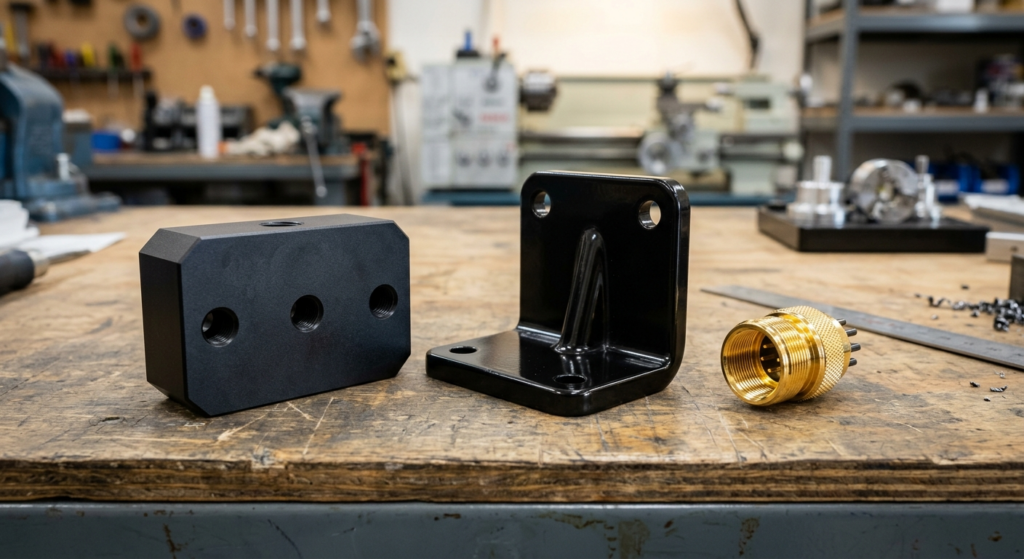
If you need corrosion resistance and a hard, wear-tolerant surface on aluminum, anodizing usually wins. If you want a thick, durable, colorful coating on a budget for steel or aluminum, powder coating is the better choice. If you need electrical conductivity, a mirror finish, or a specific metal surface like gold or nickel, electroplating is the only real option among the three. The right answer depends less on which finish is “best” and more on what your part actually needs to survive and do.
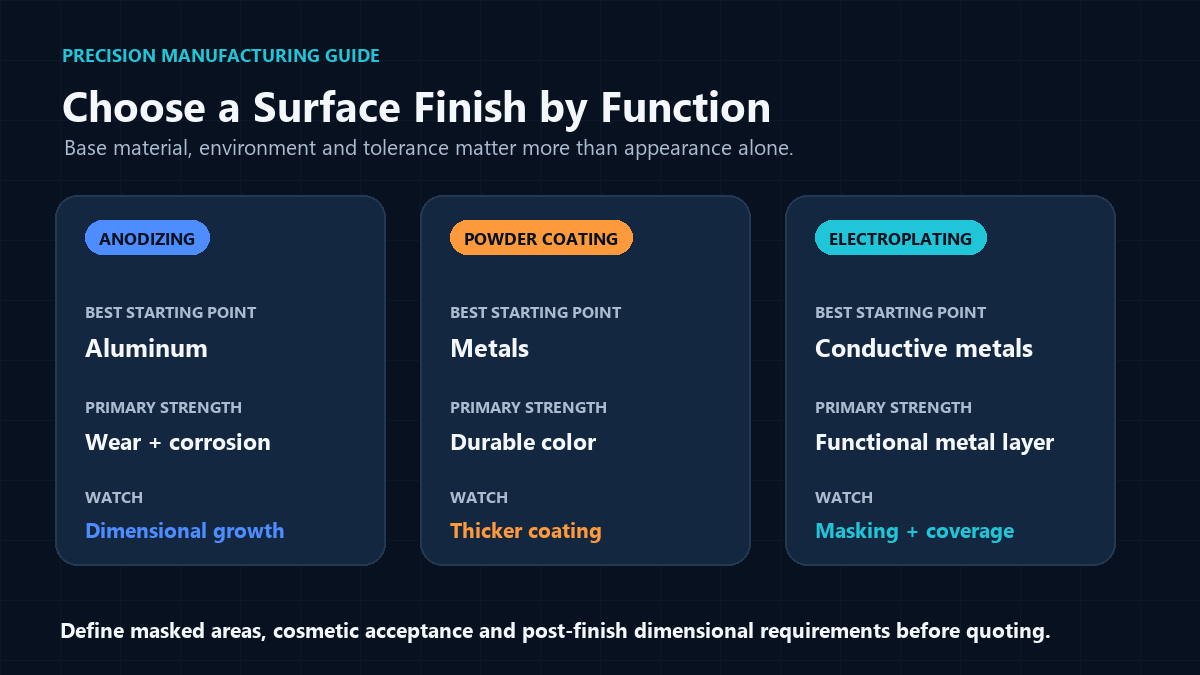
Here’s a mistake we see constantly: someone specs anodizing on a part that’s about to be TIG welded downstream, or powder coats a connector housing that needed to stay conductive. The finish gets picked based on what sounds premium rather than what the part functionally requires.
These three processes aren’t interchangeable substitutes — they’re built on completely different chemistry. Anodizing grows an oxide layer out of the base metal itself. Powder coating bakes a polymer film onto the surface. Electroplating deposits a thin layer of a different metal using electric current. Once you understand that, the “which one is better” question mostly answers itself.
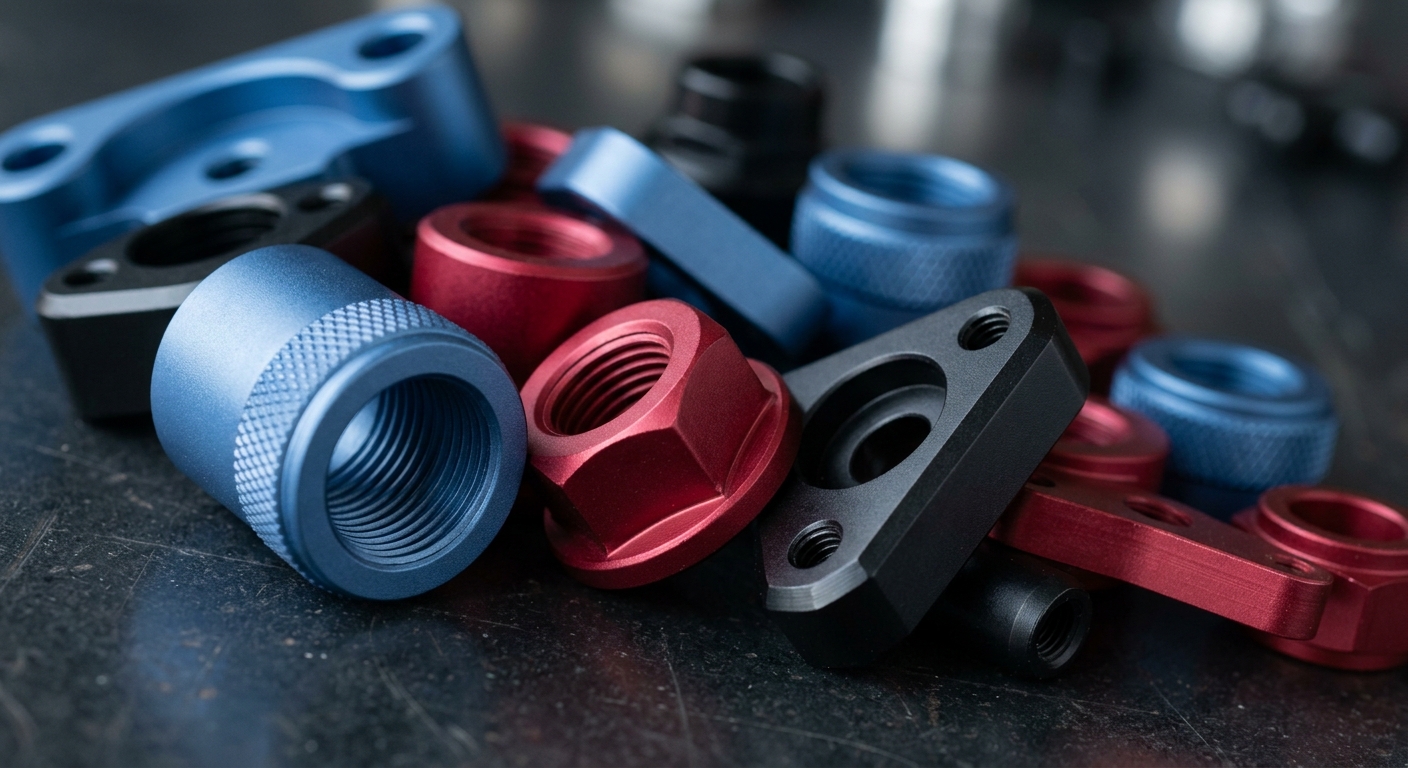
Anodizing isn’t a coating in the traditional sense — it’s an electrochemical process that converts the outer layer of aluminum (or titanium) into aluminum oxide. That oxide is harder than the base metal, which is why anodized parts resist scratching so much better than raw aluminum.
Type II anodizing gives a thinner layer (0.0002-0.001 in) and takes dye well, so it’s the go-to for colored consumer parts. Type III, or hardcoat anodizing, builds a thicker, denser layer up to 0.003 in and is used where wear resistance actually matters — pistons, hydraulic components, gears.
One limitation worth flagging: anodizing only works well on aluminum, magnesium, and titanium. Steel doesn’t anodize the same way, so if your part is steel, cross this option off the list immediately.
For teams still deciding on base metal, it’s worth reviewing material selection guidance and general material options before locking in a finish — the two decisions are connected.
Powder coating is the default choice for a reason: it’s cheap, it’s tough, and it works on almost any metal. Dry powder is sprayed electrostatically onto the part, then cured in an oven where it melts into a continuous film. The result is a coating 5-10 times thicker than a typical anodize layer.
That thickness is a double-edged sword. It’s why powder coating shrugs off scratches and impacts so well on outdoor equipment and industrial brackets — but it’s also why powder coating is a poor choice for parts with tight tolerances or press-fit features. Add 0.003 in to every surface of a precision bore and suddenly your fit is wrong.
For instance, a manufacturer building outdoor telecom cabinets typically powder coats the sheet metal housing but leaves internal mounting hardware bare or anodized, because the housing needs weather protection and color-matching to brand standards, while the hardware needs precise fit.
Electroplating is the odd one out — it doesn’t protect the base metal by changing it or covering it with polymer. Instead, it deposits an actual layer of a different metal (nickel, gold, chrome, zinc, silver) onto the part using an electric current in a chemical bath.
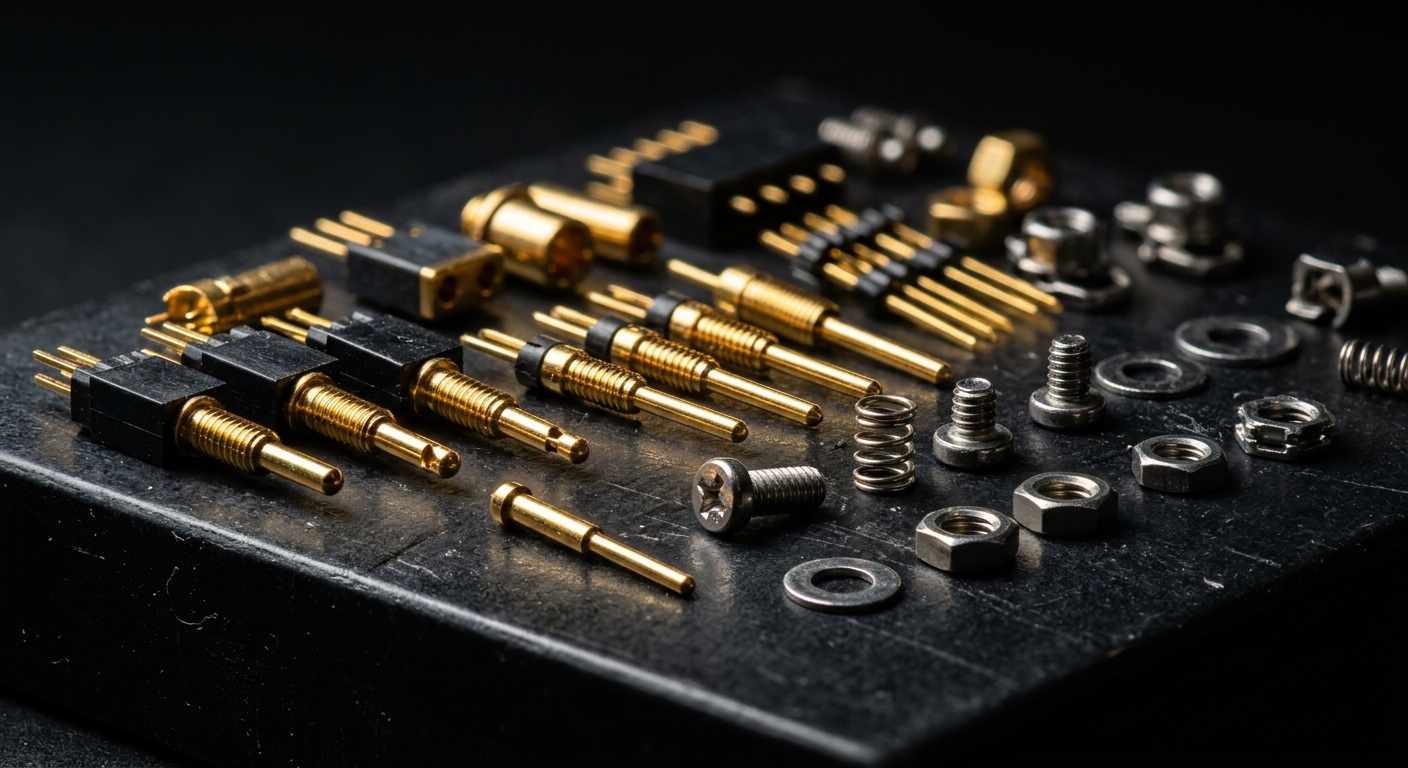
This makes electroplating the only choice on this list when you need specific electrical or metallurgical properties. Gold plating on connector pins isn’t decorative — it’s there because gold doesn’t oxidize and maintains low contact resistance over thousands of cycles. Nickel plating before other finishes acts as a diffusion barrier and adhesion layer.
Electroplating baths are sensitive to part geometry. Deep recesses, blind holes, and sharp internal corners plate unevenly — you’ll get thin coverage in corners and thick buildup on edges, sometimes called “dog-boning.” This is one more reason geometry decisions made early in part design matter — a feature that’s fine for machining can become a plating headache later.
Cost-wise, plating runs higher than powder coating and often higher than standard anodizing once you factor in setup for lower-volume runs, though at high volume the per-part cost can come down significantly.
| Criteria | Anodizing | Powder Coating | Electroplating |
|---|---|---|---|
| Best for material | Aluminum, titanium | Aluminum, steel, most metals | Steel, brass, aluminum (with strike) |
| Typical cost | Low-medium | Low | Medium-high |
| Color options | Limited (dyed anodize) | Wide, custom RAL colors | Metallic tones only |
| Coating thickness | 0.0002-0.001 in | 0.002-0.004 in | 0.0001-0.001 in |
| Corrosion resistance | Very good on aluminum | Excellent, thick barrier | Depends on plating metal |
| Conductivity impact | Insulating (Type II/III) | Insulating | Can add conductivity (gold, nickel) |
| Lead time | 2-5 days typical | 3-7 days typical | 5-10 days typical |
| Common use case | Enclosures, aerospace parts | Brackets, outdoor equipment | Connectors, decorative hardware |
Notice the coating thickness row — this is the number that should drive your decision if your part has tight-tolerance features. Full details on all available options live on our surface finishing page.
Every finish adds thickness, and thickness eats into your tolerance budget. This is the single most overlooked factor in finish selection, and it’s why we always tell customers to specify finish requirements before finalizing dimensional tolerances, not after.
A hardcoat anodized bore that needs to hold ±0.0005 in after finishing has to be machined undersized to account for the oxide growth — and that growth isn’t perfectly uniform, so you need margin. Powder coating on a snap-fit enclosure can mean the difference between parts that click together and parts that don’t fit at all if the coating thickness isn’t accounted for in the CAD model.
If you’re unsure how much margin to build in, our guide on understanding tolerances walks through how to budget for post-machining processes like finishing.
The quoted price per part rarely tells the whole story. Anodizing has low chemical and labor cost per part but requires racking parts individually through several tanks, which adds handling time at low volumes. Powder coating scales beautifully at volume because you can batch-hang dozens of parts on one rack, but color changes require purging the booth, which adds cost for small multi-color runs.
Electroplating’s hidden cost is often waste treatment and environmental compliance — hex chrome and cyanide-based plating baths require careful disposal, and that regulatory overhead shows up in your quote whether you see it itemized or not.
Consider a robotics gripper assembly we’ve seen come through similar shops: the aluminum housing gets Type II black anodize for a clean cosmetic look and mild corrosion resistance. The steel mounting bracket underneath gets powder coated because it’s structural, exposed to shop dust, and doesn’t need tight tolerances. The electrical contact pins inside the gripper get gold electroplating because they cycle thousands of times and need to maintain low contact resistance.
Three finishes, one assembly, each chosen for what that specific component actually has to do — not because one finish is universally “the best.” This is the mindset worth adopting: finish selection is a per-component decision, not a per-project one.
This kind of layered finishing strategy shows up constantly in industrial applications where different parts of the same assembly face very different service conditions.