 26 Mar, 2026
 Industry News Design & Manufacturing
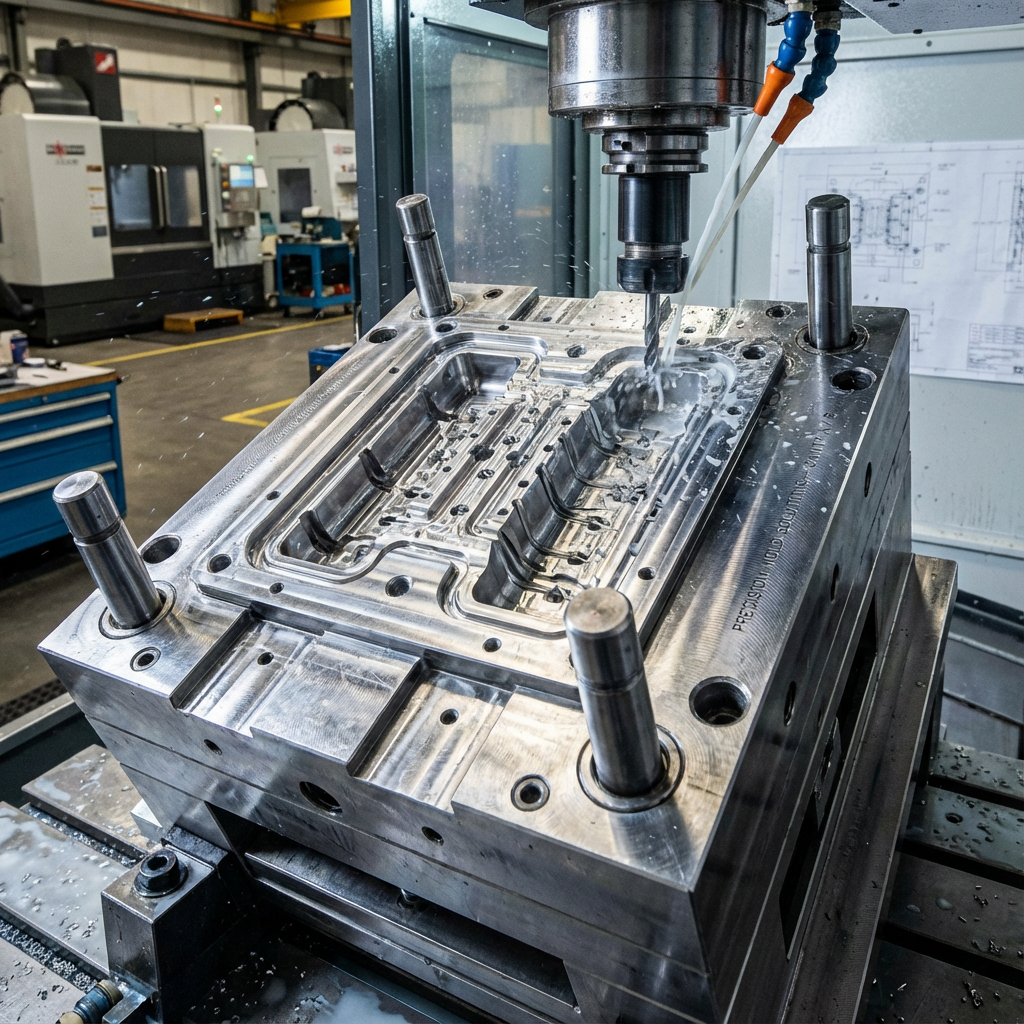
The break-even point between injection molding and CNC machining almost always lands somewhere between 500 and 3,000 units — not a fixed number, but a range determined by part geometry, material, and mold complexity. Below that range, CNC machining wins because you skip tooling costs entirely. Above it, injection molding wins because the mold cost gets spread thin across thousands of identical parts, dropping the per-unit price to pennies.
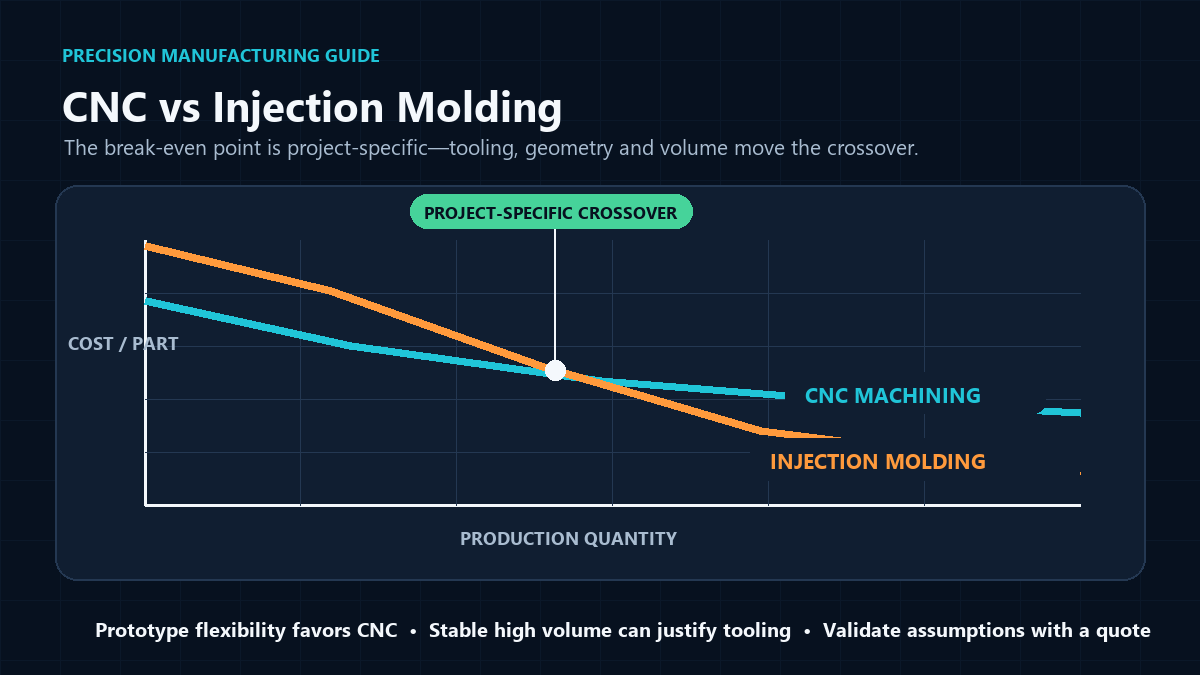
Ask five manufacturing engineers where the break-even sits and you’ll get five different answers. That’s not because nobody knows the math — it’s because the math changes depending on the part. A simple plastic bracket the size of a phone case might break even at 800 units. A complex enclosure with undercuts, tight tolerances, and multiple wall thicknesses might not break even until 5,000 units, because the mold itself is expensive to build.
The real driver isn’t volume alone — it’s the ratio between tooling cost and per-part machining cost. A $15,000 mold amortized over 1,000 parts adds $15 to each unit. Amortized over 10,000 parts, that’s $1.50. Meanwhile, CNC machining cost per part barely changes with volume unless you’re optimizing toolpaths or batching setups.
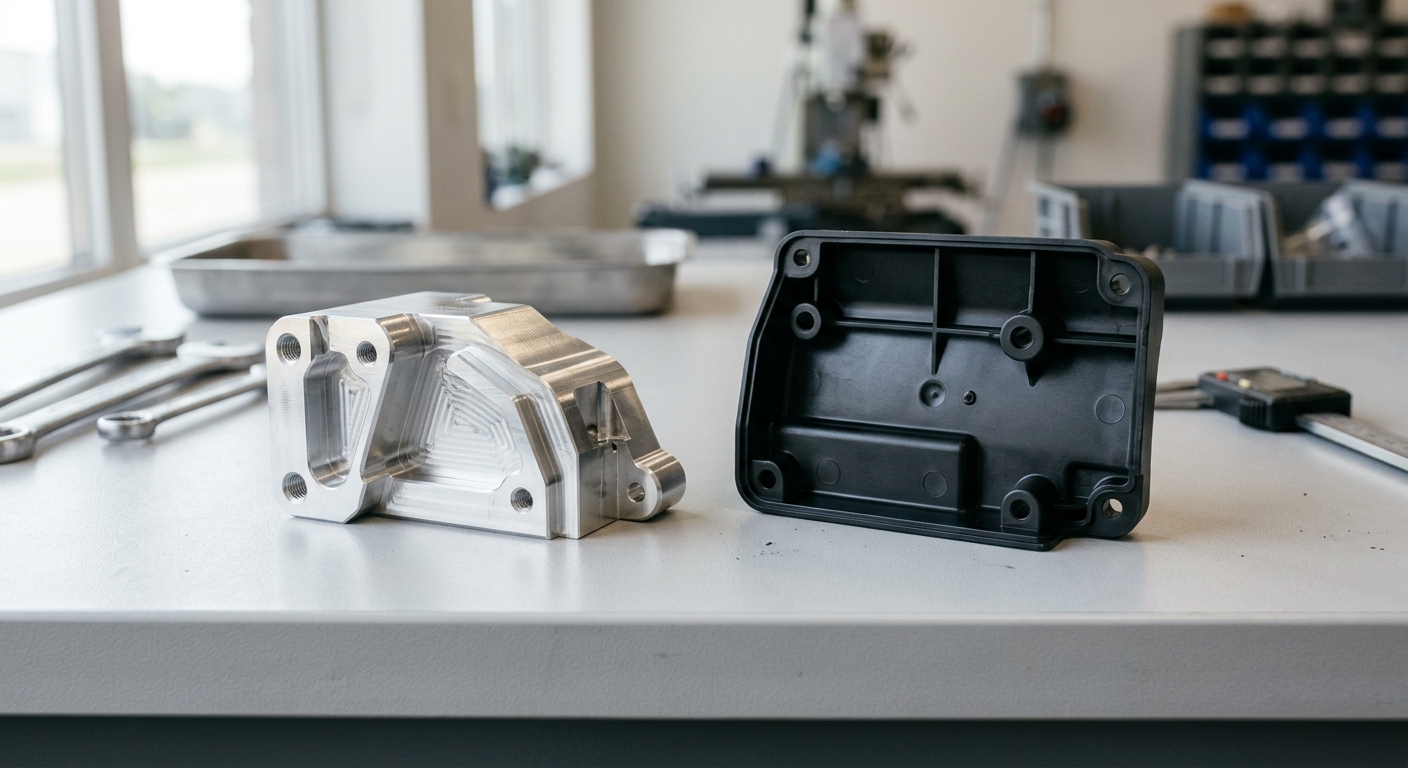
Let’s run a real scenario. Say you need a small plastic housing, roughly 80mm x 50mm x 20mm, in ABS.
Even at 1,000 units, molding wins here by a wide margin. But drop the quantity to 150 units and CNC machining costs $5,250 versus molding’s $8,375. That’s the break-even shift in action — it can happen well under 1,000 units depending on part complexity and mold price.
Three variables move the break-even number more than anything else, and most buyers only think about one of them.
Deep cavities, thin walls, and tight internal tolerances make molds more expensive to build and harder to maintain — pushing the break-even volume higher. A flat, simple part with generous tolerance requirements keeps mold costs low and shifts the break-even down.
Not every material is moldable at reasonable cost. Some engineering plastics and all metals require CNC or other processes entirely. Check which plastics work well for CNC machining before assuming molding is even an option.
A multi-cavity mold (say, 4 or 8 cavities) multiplies your output per cycle, dramatically lowering per-part cost at high volume — but it also raises upfront tooling cost, pushing the break-even point higher for smaller orders.
A hardware startup building a smart-home sensor enclosure once ordered a $22,000 injection mold expecting to sell 5,000 units in year one. They sold 600. The mold amortization alone made each unit cost more than double what CNC machining would have.
Compare that to a medical device company prototyping a housing for a diagnostic tool. They stayed on CNC machining through three design revisions — over 400 units total — before locking the geometry and finally moving to injection molding at 3,000 units per quarter. That sequencing saved them from paying for mold changes twice.
The lesson: volume uncertainty is itself a cost. If you’re not confident in your annual quantity, CNC machining buys you flexibility that molding simply can’t.
Cost isn’t the only factor — speed matters just as much for many projects. CNC machining can deliver first parts in 1–7 days. Injection molding, once you include mold design, steel or aluminum sourcing, and tooling trials, typically takes 4–12 weeks before you see a single molded part.
If your project has a hard deadline — a trade show, a client demo, a regulatory submission — that lead time difference can matter more than the per-part cost. Plenty of teams choose CNC machining for their first 200–500 units purely to hit a launch date, then transition to molding once demand is proven.
Here’s a move that smart buyers make and first-timers rarely consider: use CNC machining as a bridge while your mold is being built. Since mold lead time runs 4–12 weeks, you can machine 100–300 units on CNC equipment to cover early sales or testing, then switch to injection-molded parts once the mold is ready.
This hybrid approach avoids two expensive mistakes — rushing a mold design before the part is finalized, and stalling sales while waiting on tooling. It’s especially common in product categories with tight design-for-manufacturing considerations, where a few CNC iterations catch issues that would otherwise show up as costly mold rework.
Volume isn’t the only variable — sometimes CNC machining stays the better choice even past 5,000 units. This happens when:
Aerospace and medical industries run into this constantly — parts that need to be metal, precise, and low volume all at once. For a closer look at how demanding industries handle this, see how aerospace companies rely on multi-axis machining instead of molding for critical components.
You don’t need a cost accountant to get a workable estimate. Follow this sequence:
For example: if CNC costs $30/part, molding costs $3/part, and the mold is $12,000, the math is 12,000 ÷ (30−3) = 444 units. Below 444, stick with CNC. Above it, molding pulls ahead.